A clear pathway from
first climb to expert.
GCS assesses climbers across six skill domains as they progress through structured stages. Like belt colours in martial arts, visible, meaningful, and universally understood.
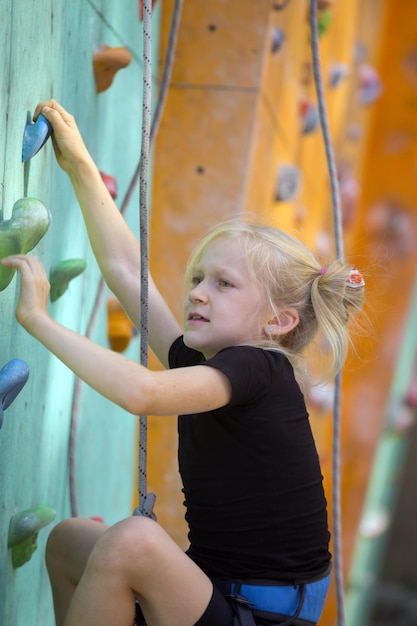
Early Years
Movement literacy, confidence, and climbing readiness. Play-based sessions designed to introduce young children to climbing safely and joyfully.
Stage 1: Discover
Positive first experiences and foundation techniques. Learning fundamental movement, basic safety, and what climbing feels like, the start of structured progression.
Stage 2: Explore
Independence and core systems. Expanding skills, problem-solving on the wall, building endurance, and starting to take ownership of your own climbing.
Stage 3: Develop
Structured improvement and pathway ownership. Refining ability, advanced footwork, route strategy, and developing a personal climbing style.
Stage 4: Perform
Familiarising introductions to the specialisms, outdoor, coaching, route setting, and competition. The start of off-ramps that guide climbers toward the wider sector.
Stage 5: Evolve
High autonomy and long-term climbing identity. Mentoring others, pursuing chosen specialisms, and shaping a lifelong relationship with the sport.
Assessed across six dimensions.
Every stage requires demonstrated competency across all six domains. This ensures well-rounded development, not just strong fingers.
Safety & Risk Awareness
Safe participation and judgement, hazard recognition, decision-making, and responsible climbing.
Movement & Technique
Movement quality and efficiency, body positioning, footwork, balance, and reading the wall.
Equipment & Systems
Understanding and managing climbing systems, harness use, belaying, knots, and equipment checks.
Self-Management
Independence and responsibility, focus, managing fear, and taking ownership of your own development.
Social Climbing Skills
Communication and shared participation, climbing partnerships, etiquette, and supporting others on the wall.
Personal Progression & Reflection
Goal setting and ownership, reflective practice, personal milestones, and shaping your own journey.
How climbers progress.
Progression is evidence-based, coach-assessed, and digitally tracked. No written exams, just real climbing observed by qualified GCS coaches. Every session follows a structured five-phase model built on modern coaching theory and practice, so what learners experience at one accredited centre is consistent with the next.
Climb & learn
Attend structured GCS sessions at an accredited centre. Each session targets specific elements within your current stage.
Demonstrate skills
Coaches observe and mark competency elements during sessions. Progress is tracked digitally across all six domains in real-time.
Earn your stage
Complete all elements in a stage and you earn your GCS credential, a globally recognised, digitally verifiable record of progression.
Every session tracked.
Every milestone visible.
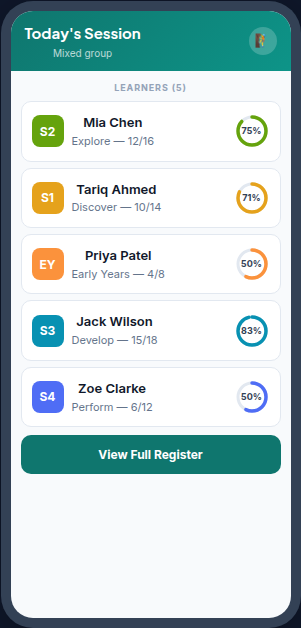
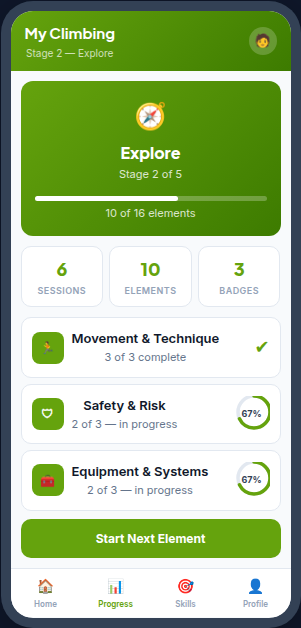
GCS is powered by connected apps for coaches, learners, parents, and centre managers, making progress visible in real-time across the whole climbing ecosystem.
Coach App
Mark elements during sessions. View learner progress. Manage registers. Build your own GCS coaching credentials.
Learner Profile
Track your stage, view skill domains, see session history, and work towards your next milestone.
Parent Dashboard
Real-time updates after every session. See your child's progress, stage achievements, and what's coming next.
Centre Console
Dashboard for centre managers, session scheduling, coach performance, participant metrics, and accreditation status.
Want to bring GCS to your centre?
Accredit your climbing centre and start delivering structured GCS sessions.